



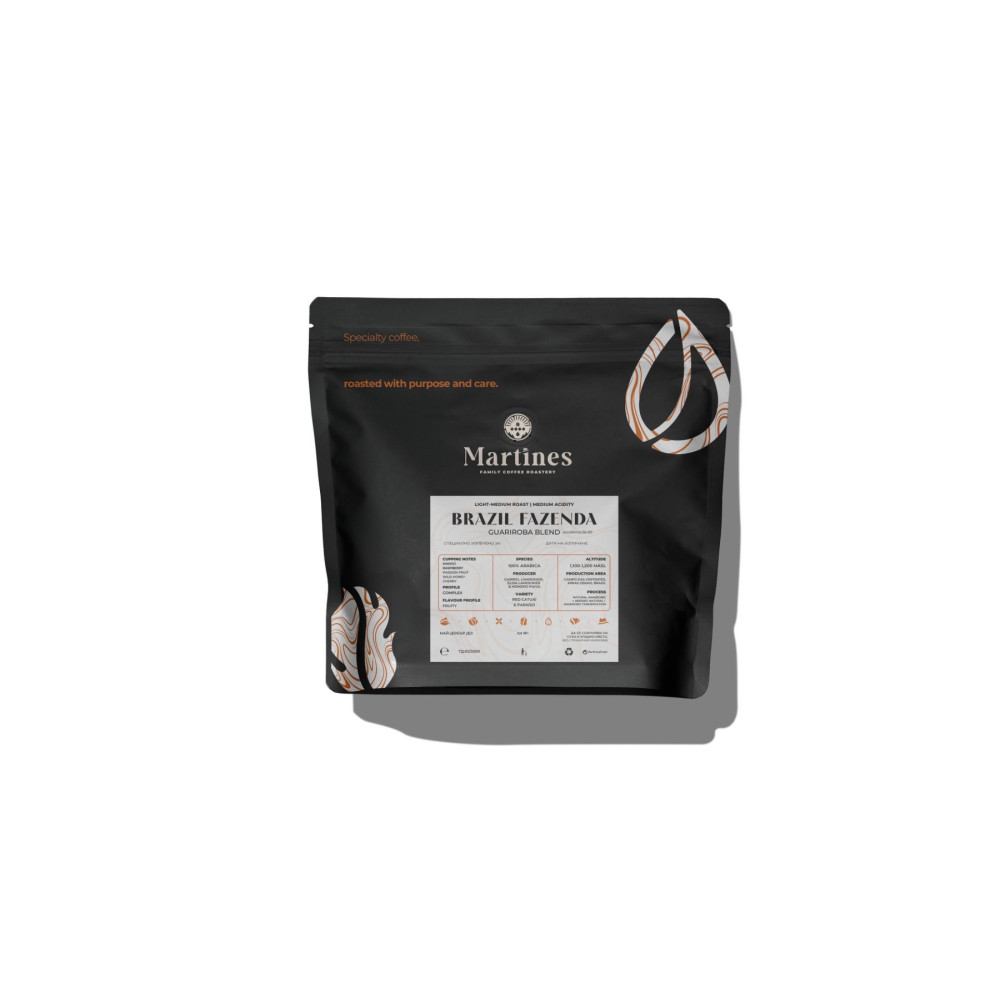
Specialty coffee Brazil Fazenda Guariroba blend
CUP CHARACTERISTICS:
Aroma: Floral, jasmine, tropical fruits, red berries, honey, sweet spices
Flavour: Mango, raspberry, passion fruit, wild honey, cherry, guaraná, lemon zest, star anise
Body: Medium-high, creamy
Acidity: Medium, citric
Aftertaste: Sweet
Quality: Excellence (86–89)
Roasting level: Light-medium
Recommended for: Espresso, Moka, Filter
 |
 |
 |
This offer ends in:
- Stock: In Stock
- Model: 1097

|
Species: 100% Arabica Varieties: Red Catuaí & Paraíso Processes: Natural Anaerobic + Aerobic Natural / Anaerobic Fermentation Fermentation: Controlled anaerobic fermentation, including selected native microorganisms Drying: Natural drying on African beds for 30–40 days Altitude: 1,100 masl Screen Size: 16+ Region: Campo das Vertentes, Minas Gerais, Brazil Farm: Fazenda Guariroba Producers: Gabriel Lamounier, Elisa Lamounier & Homero Paiva Category: Specialty Coffee |
Profile 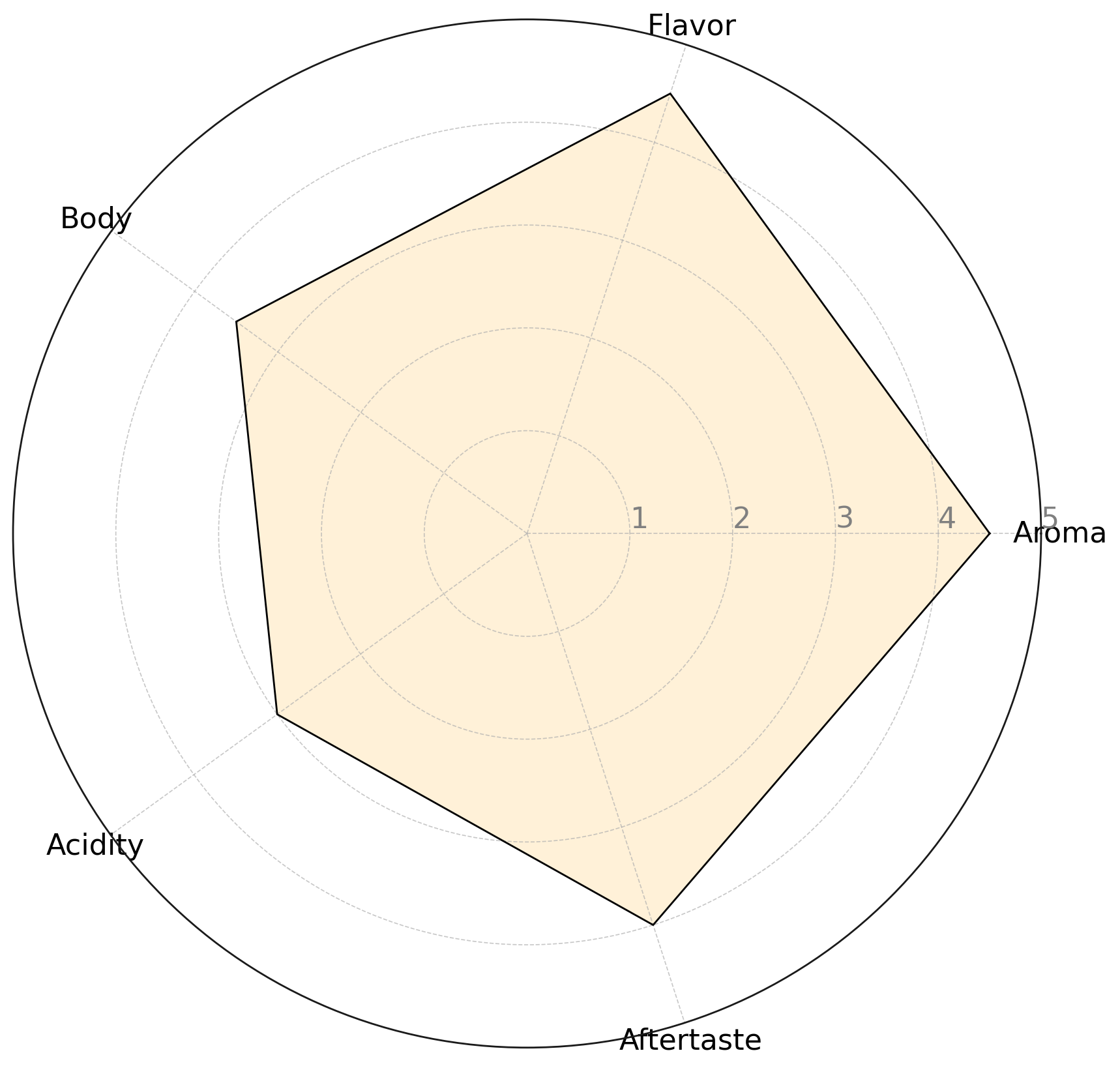
|
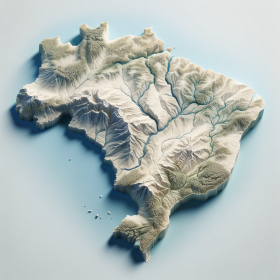
Region Brazil 
|
Origin & Producer – Fazenda Guariroba, Brazil
This Brazilian specialty coffee brings together two distinctive microlots from Fazenda Guariroba, located in Campo das Vertentes, Minas Gerais. Rather than creating a conventional Brazilian coffee profile dominated by chocolate and nuts, this blend focuses on the farm's more fruit-forward, floral and fermentation-driven character.
Both coffees are grown at approximately 1,100 metres above sea level and come from the 2025/26 harvest. The blend combines Red Catuaí and Paraíso, giving the final cup a broader aromatic and flavour spectrum than either component alone.
The Red Catuaí component undergoes 36 hours of anaerobic natural fermentation, followed by slow drying on African beds for approximately 30–40 days. Its profile contributes tropical fruit, mango, cherry, passion fruit, guaraná and a creamy sweetness.
The Paraíso component follows a more complex fermentation protocol: 24 hours of aerobic natural processing followed by 24 hours of anaerobic fermentation in the presence of selected microorganisms originating from the crop itself. The farm uses its own signature yeast culture, developed by Gabriel at origin. The coffee is then slowly dried for 30–40 days. This component brings wild honey, jasmine, raspberry, lemon zest and star anise to the blend.
Together, they create an expressive single-farm Brazilian specialty coffee with tropical sweetness, berries, florals, bright citrus and an elegant spicy finish.
About the Varieties – Red Catuaí & Paraíso
Red Catuaí is one of Brazil's most established Arabica varieties. It is valued for its adaptability and productivity, but when carefully cultivated and processed it can also produce excellent specialty lots. In this blend, the anaerobic natural process pushes Catuaí toward a more expressive profile, contributing mango, passion fruit, cherry, guaraná and creamy sweetness.
Paraíso is a Brazilian Arabica cultivar developed from a cross involving Yellow Catuaí and Timor Hybrid genetic material. It is valued agronomically for its resistance characteristics and its potential for high-quality production. In this particular lot, the controlled aerobic/anaerobic fermentation brings out a more delicate and aromatic expression, including jasmine, raspberry, wild honey, citrus and spice.
The combination is particularly interesting: Catuaí provides body and ripe tropical fruit, while Paraíso adds aromatic complexity, brightness and floral character.
Why Choose This Coffee?
This isn't a typical chocolate-and-hazelnut Brazilian profile. It is designed for customers looking for a more modern and expressive Brazilian specialty coffee.
The combination of two varieties and two fermentation protocols creates a layered cup in which tropical fruit, berries, jasmine, honey, citrus and spice come together with a creamy body and pronounced natural sweetness.
It also offers unusually strong traceability: both components come from the same farm, same producers, same region, same altitude and same 2025/26 harvest, while expressing two different approaches to variety and fermentation.