






Brazil Specialty Primavera Farm - coffee of the month September

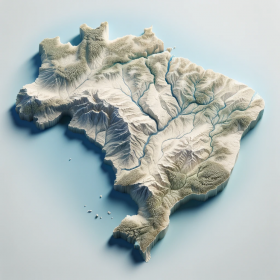
It is a well-known the fact that Brazil is the largest coffee producer and exporter in the world. Most of that is lower quality Arabica and even lower - Robusta, but there are some Specialty types that once you try them leave a mark in your mind. But why if producing so much coffee in the country only so small part is special? There are several reasons. Because the coffee is a major agricultural product in Brazil, the farmers are using economies of scale, not quality. There are other factors such as climate, soil, cultivation and more. However, Martines caffe team introduces you to the Brazilian specialty coffee from the Primavera farm, which takes a honorable place as The Coffee of the month- September in our blog.
.jpg) The farmer Ricardo Tavares has devoted his life to the coffee industry, and this love comes from his father, who has been roasting coffee for many years. As early as 19-year-old Ricardo starts his own history in the industry when accompanying his father on a trip to Northern Brazil. After returning home, he made the decision not to pursue his career as an economist and instead devoting himself entirely to buying and selling coffee beans in Minas Gerais.
Most of the production grown in the area is naturally processed, but the interest and supply of washed coffee is growing more and more.
He has always dreamed of owning and managing coffee farms, and for years after starting to work in the industry, he acquired Primavera. The 980 hectares planted with coffee are not just a plantation, but a place he and his team have turned into a regional example of the possibility of producing Specialty coffee in Brazil.
The name "Primavera" means "spring" in Portuguese, which perfectly matches to the ideal climate in which they grow coffee trees. The altitude is between 1000 and 1050 meters with average temperatures between 20 and 24 ° C per year and rain falls from 1000 to 1300 mm. The farm has several modern facilities including 24,000 m² of drying patio, 14 electric dryers and equipment for processing natural, pulped natural, honey processed and fully washed coffees.
Social and environmental sustainability have always been an integral part of the farm's business, and it is essential for Ricardo that the production techniques minimize the environmental damage. Therefore, they create a special power plant on the farm that recycles the water used in the production into energy, and the pulps of the coffee fruit, which remains as waste, is used as natural fertilizer. The Primavera team is working to develop and educate the local sector. It is widely recognized as one of the most sustainable farms in Brazil.
.jpg) Another remarkable thing is the mahogany forest around the plantation. Because large areas of deforestation are rapidly enlarging in Brazil due to various factors, the Tavares family is taking care to stop this trend. The mahogany planted near the coffee trees also guarantees a better harvest by shading and maintaining a consistent temperature, as sometimes can be too hot during the day and too cold at night.
Today, Primavera is managed by the son of Ricardo-Leonardo Tavares, who says: “High-performance beans show to the world the true quality of Brazilian coffee. This is our job: to emphasize our strengths when it comes to a quality drink.” He continues his father and grandfather's mission and works hard to improve the coffee industry by visiting many farms in Brazil with his team, asking various questions related to the production and processing of our favorite beverage, selecting information and subsequently applying good governance and sustainability practices.
Chapadas de Minas is the region where coffee comes from. There is a stunning relief formed by land and river canyons. The coffee production began in the 1970s, which brought significant economic benefits to the region by increasing employment opportunities. Of all the production regions, this area is the most important for the small producers and is essential for the local economy.
Coffee variety is Yellow Catuai, which is a hybrid between Caturra and Mundo Novo. It was developed in 1949 by the Instituto Agronômico de Campinas (IAC), located in Brazil. Along with Red Catuai, it is a highly resistant variety, suitable for cultivation in high and windy areas. Both of them have very refined and pure acidity. The process is washed.
.jpg)
The cupping profile of our coffee contains chocolate notes accompanied by a malt and lemon hints in the taste. The body is thick and creamy and the acidity is medium. A prolonged chocolate aftertaste.
Primavera's ability to respond to new agricultural research and technology and new trends in consumer preferences is one of its major strengths. It is the future of the Specialty coffee in Brazil!
You can order our Brazilian coffee from the Primavera farm: roasted (here) and green (here).
Was is interesting this information for you? What would you like to be the next "Coffee of the Month" to introduce to you? Share with us on social media (Instagram - @martinescaffe; Facebook - MARTINES CAFFE) or in the comments below.
.jpg) |
.jpg) |
.jpg) |
.jpg) |
.jpg) |
.jpg) |
.jpg) |
.jpg) |
Leave a Comment