


Sigri AA - coffee of the month October

And how fast the time passes. Just a year ago, we launched our blog, where we've been publishing articles for 12 months now, and the interest is growing. The whole team at Martines Caffe Family Roastery thank you.
We have chosen the anniversary article in our Cafe of the Month section to be dedicated to Papua New Guinea Sigri AA. A specialty coffee that grows in even more specialty place.

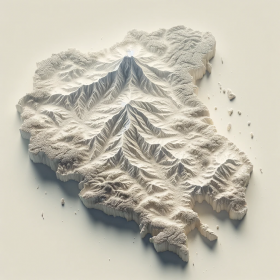
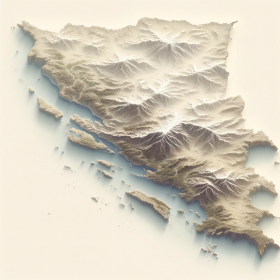
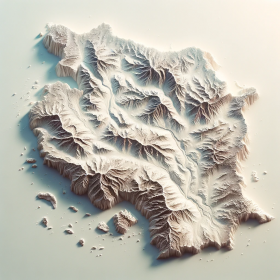
This full with mountains country contains many tropical forests with several unknown species of plants and animals that are about to be discovered worldwide. Soil and water conservation is a high priority for the locals. The many trees that are planted give shade to the coffee plants. Not only this helps in the uniform growing of the plants, it also provides natural habitat for at least 90 bird species.
A total of 65,000 acres of land are covered by coffee plantations located in several areas such as the Eastern Highlands, the Western Highlands and Chimbu Province. There are six plantations in the Western Mountains that produce 40% of the total crop: Kindgen, Bunum Wa, Kujip, Kigabah, Aviamp and of course Sigri.
The production area from which we import our coffee is Mount Hagen. Papua New Guinea's third largest city and the capital of West Highland. The city is located in mainland of Papua New Guinea at an altitude of 1677m. and is named after Mount Hagen Volcano, located about 24 km northwest.
The Sigri plantation, located in the Vagi Valley, in the Western Highlands region of Papua New Guinea, was found in the 1950s and has quickly gained a reputation that continues to grow and is internationally recognized in the cultivation of gourmet coffee. All the plantations are Arabica, mainly Typica varieties, which are from seeds imported to Papua New Guinea in 1937, "relatives" of Jamaica Blue Mountain. The varieties at the Sigri farm are Typica, Caturra, Catuai.
 Today, despite its development, much of the local crop comes from small farmers, each with about 1-2 hectares, called "gardens", which grow small amounts of coffee trees and anything else the family or community can cultivate. needed for use or trade. Less than 3 percent of the country's territory is used for commercial agriculture, and forests make up more than 63 percent of the total landscape.
Over the last 5 years, Papua New Guinea’s coffee has reached so high quality, with almost 0 defects, is impeccable, and only by looking at the beans is it clear how well was cultivated.
The main crop is harvested from May to July. All cultivation and processing practices follow a system that has been proven for many years and meets the highest standards and quality at every stage.
Washed and the quality control starts from the beginning. The cherries ware hand-picked and carefully selected. They should be red and fully ripe, which allows proper balance between sugar and acidity. After the harvest, the coffee is left in to dry naturally or during the monsoons.
The following part is the fermentation process, a three-days period, stopped every 24 hours by washing - but unlike most other coffees, the Sigri process is fully immersed in water by the next day, which creates the preconditions for a superior product.
The taste resembles cedar, honey, floral notes and smoked nuts, the body is soft and the acidity is medium-low. The aftertaste is cedar, pine, maple syrup.
You can order our Papua New Guinea Sigiri AA coffee: Roasted here and Green here.
Was is interesting this information for you? What would you like to be the next "Coffee of the Month" to introduce to you? Share with us on social media (Instagram - @martinescaffe; Facebook - MARTINES CAFFE) or in the comments below.
Leave a Comment