







Congo Kivu - coffee of the month June

It's June! And Martines presents you the "Coffee of the Month" and Congo Kivu. A country with rich history and a painful past. The coffee production is only a small part of the country's potential and has proved its resilience despite the two Congo wars and the genocide.

Coffee was introduced in the 1940s during the Colonial period when the Belgians realized that the local Bourbon trees have the ability to produce excellent coffee and encouraged the Congolese to create micro-plantations. The coffee farmers needed mentoring and training to increase the production and to improve the quality of their crops.
International sponsors, the private sector and the Congolese authorities needed to work together to ensure that coffee meet the strict standards and requirements set by buyers of specialty products. The organization of well-managed agricultural cooperatives is essential for successful final results.
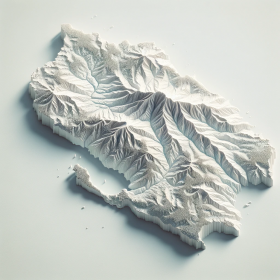
On another hand, the tropical climate, fruitful soils and abundant rain provide ideal conditions for growing coffee. The Arabica type grows mainly in the eastern Congo mountains, for example in Kivu and Ituri at about 1,500 m above the sea level, and represents one fifth of the total coffee production. Robusta is mainly produced in the Northeast, for example in Isiro and in the lowlands of Ubangi, Ulu, Kivu, Cassai and Central Congo. The country is considered as one of the new jewels in the world of coffee.

One of the most famous regions for coffee production in Congo is Kivu, part of the Great Lakes of Africa, located between the Democratic Republic of the Congo in the west and Rwanda in the east. It is massive, freshwater and provides a natural ecosystem suitable for growing the Bourbon coffee trees. The harvest is processed manually. The pulp of the fruit is removed from the beans immediately after picking. Afterwards, the coffee is washed.
And the stations in which the process is carried out are built on hilly slopes, naturally using gravity to allow the water to fill the soaking tanks. The coffee is dried in direct sunlight. Finally, it is being sorted by hand in order to remove any defects better.
Congo Kivu combines juicy, sweet and fruity flavors, highly expressed and notes of blueberries and a feeling of pleasant roundness in the mouth. It has a good body with medium acidity.
Our coffee Congo Kivu can be purchased here (roasted) and here (green).
Was is interesting this information for you? What would you like to be the next "Coffee of the Month" to introduce to you? Share with us on social media (Instagram - @martinescaffe; Facebook - MARTINES CAFFE) or in the comments below.
Leave a Comment